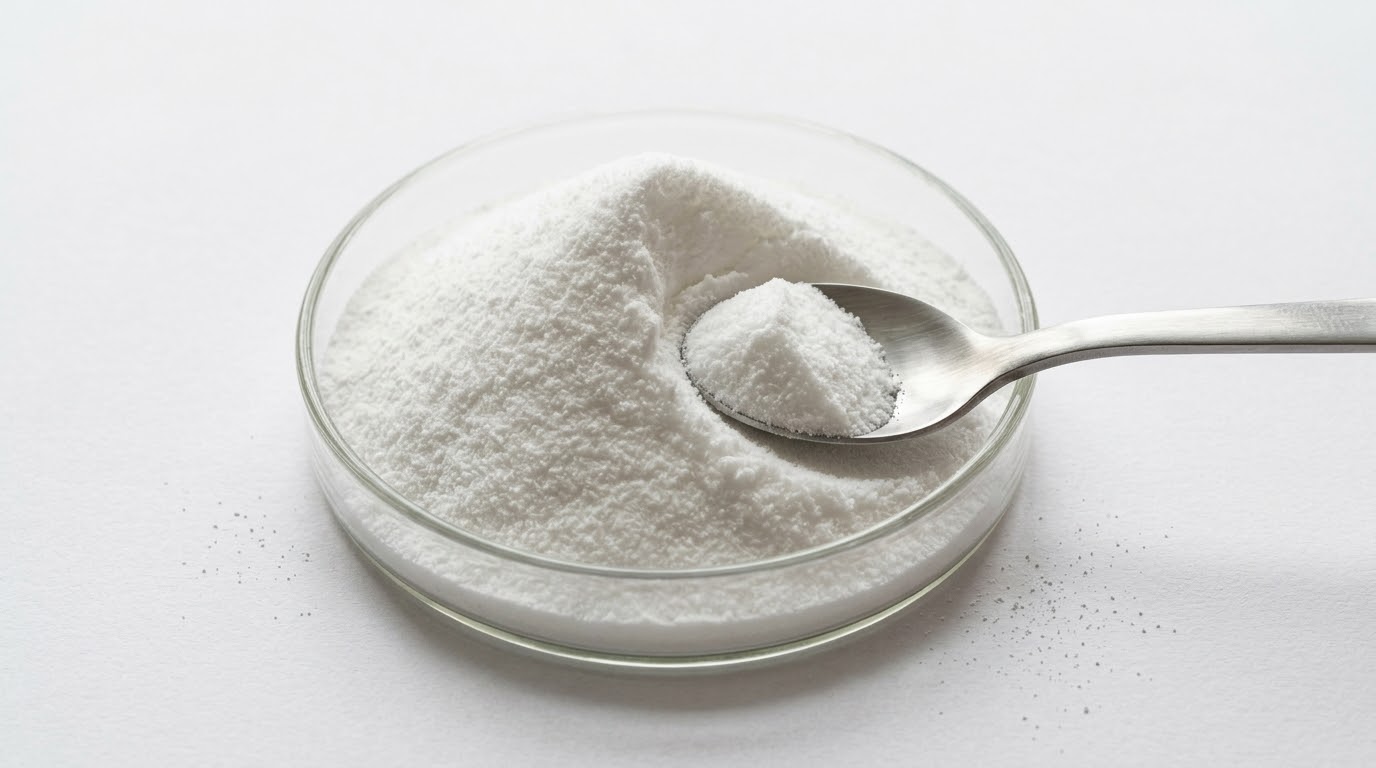
Acesulfame potassium, also called acesulfame K or Ace-K, is a high-intensity sweetener approximately 200 times sweeter than table sugar.
If you are reformulating a beverage, dairy product or confectionery, choosing between Ace-K and sugar affects sweetness, texture, ingredient costs and sourcing.
This guide compares their uses, pricing factors and what to check before buying in bulk.
What is the difference between Acesulfame K and sugar?
The main difference is how much you need to achieve the desired sweetness and what each ingredient contributes to the finished product.
Sugar provides bulk as well as sweetness. Ace-K delivers intense sweetness in much smaller quantities, so it does not replace every function sugar performs in a recipe.
| Factor | Acesulfame K (Ace-K) | Sugar |
| Sweetness | About 200 times sweeter than sugar | Standard sweetness reference |
| Quantity used | Small amounts | Usually larger amounts |
| Calories | Contributes little to no calories at typical sweetening levels | Provides calories |
| Texture and bulk | Does not provide the same bulk as sugar | Adds bulk and can affect texture |
| Processing | Heat-stable under many food-processing conditions | Behaviour depends on the process and recipe |
| Formulation | Often blended with other sweeteners | Can be used alone or with other sweeteners |
Which products can you formulate with Acesulfame K?
Ace-K is used in food and beverage applications where intense sweetness is required. Depending on the intended use and applicable regulations, it may suit beverages, confectionery, dairy products and other processed foods.
It is also heat-stable, which can make it useful in products that undergo heating. However, suitability depends on the complete recipe, processing conditions and permitted use in your target market. Test the sweetener in your actual formulation before committing to a large order.Ace-K is also commonly combined with other sweeteners. A blend can help you achieve the sweetness profile you want, so compare the finished product’s taste rather than judging ingredients by sweetness alone.
How does Acesulfame K price compare with sugar price?
You can’t compare prices without considering how much of each ingredient your recipe requires. Ace-K is much sweeter than sugar, so the purchase price per kilogram alone will not tell you which option costs less in your finished product.
When comparing quotations, consider:
● Price per kilogram: Confirm the quoted price, currency and unit.
● Use rate: Estimate how much ingredient your formulation requires.
● Replacement ingredients: Account for any ingredients needed to replace sugar’s bulk or texture.
● Order and delivery costs: Check minimum quantities, packaging, freight and delivery terms.
● Quality requirements: Compare products against the specification your production process requires.
What should you check before sourcing Acesulfame K?
Start with a clear request for quotation (RFQ). Include the food-grade specification you need, the quantity, the packaging, the delivery destination and the lead time you can accept. Our guide on how to write an industrial chemical RFQ explains what suppliers need to see.
Ask each supplier for a Certificate of Analysis (CoA) for the batch on offer, and check it against your specification. Confirm the product identity, purity and how long the quotation stays valid. If the ingredient is going into a regulated product, verify that it is permitted for your intended application in your target market. A clear RFQ lets you compare suppliers on equivalent terms rather than on price alone.
How can you source Acesulfame K through Matta Marketplace?
Once your requirement is defined, you can browse Acesulfame K on Matta Marketplace and submit your request.
State your application, grade, physical form, quantity, packaging and delivery location. Ask suppliers for their product specifications, compliance documents and a batch-specific CoA, so you can compare offers against your own requirements before committing to a bulk order. Ready to compare suppliers? Submit your Acesulfame K requirement on Matta Marketplace.
Frequently Asked Questions
Does Acesulfame K come in different grades?
Yes. Food grade is the relevant specification for beverages, dairy and confectionery. Pharmaceutical and oral-care grades follow different requirements, so state the intended application in your RFQ.
Is Acesulfame K approved for food use in my market?
Approval depends on the regulator and the product category. Confirm the permitted use with the relevant authority before you order.
Can Acesulfame K be used on its own?
It can, but formulators often blend it with other sweeteners to improve the overall taste. Test the blend in your product to see how it performs.


