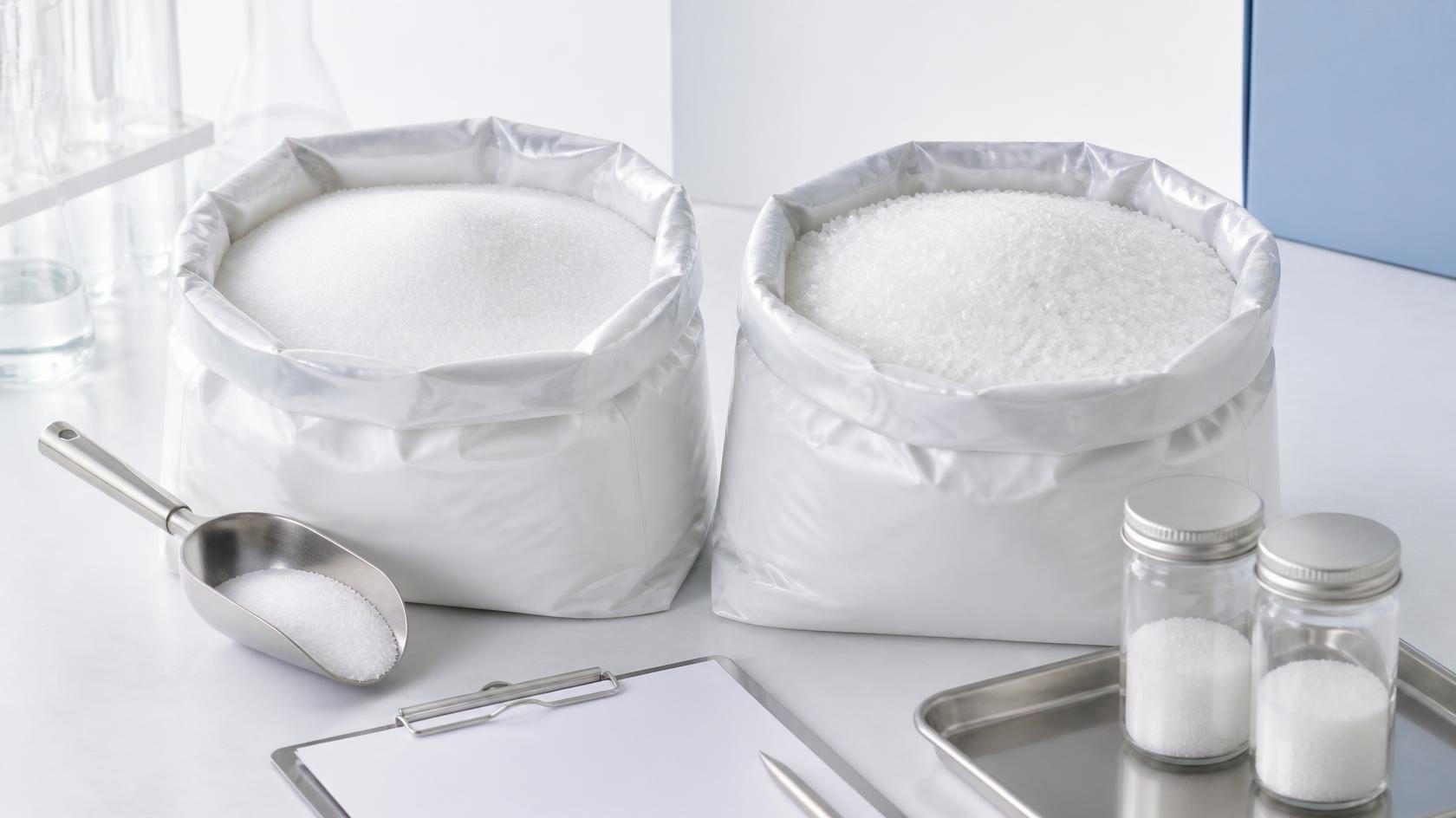
Citric acid anhydrous and citric acid monohydrate are two forms of citric acid used across food, pharmaceutical, personal care, cleaning and industrial applications. Although both materials provide citric acid, they contain different amounts of water of crystallisation, which affects formulation calculations, product specifications and manufacturing results. This guide explains the differences between citric acid anhydrous and monohydrate, outlines their common uses and helps you select the form that matches your approved formulation and production requirements.
What Is Citric Acid Anhydrous?
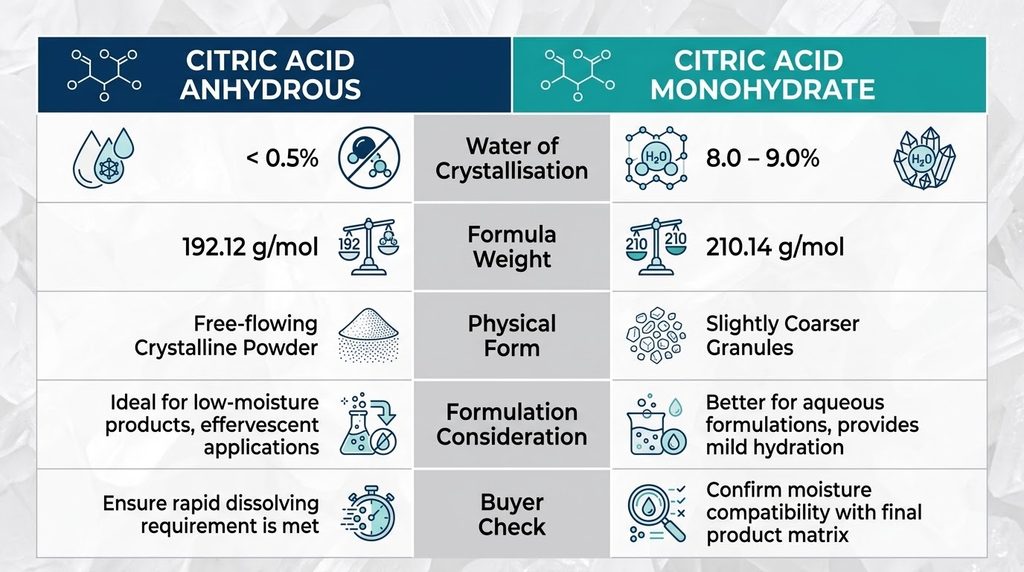
Citric acid anhydrous is a water-free form supplied as white crystals or granules. Because it contains no water of crystallisation, it delivers more citric acid per unit of weight than monohydrate.It is widely used in food, beverage, pharmaceutical, personal care and industrial applications where a water-free ingredient or a higher citric acid contribution by weight is required.
What Is Citric Acid Monohydrate?
Citric acid monohydrate contains one molecule of water within each crystal structure. It is also supplied as white crystals or granules, but it provides slightly less citric acid by weight than the anhydrous form.It is commonly used in food, beverage and cleaning formulations, particularly where a formulation has been developed and validated specifically around the hydrated form.
Citric Acid Anhydrous vs. Monohydrate: Key Differences
| Specification | Citric Acid Anhydrous | Citric Acid Monohydrate |
| CAS number | 77-92-9 | 5949-29-1 |
| Water of crystallisation | None | One molecule of water |
| Citric acid content by weight | Higher | Slightly lower |
| Common physical form | Crystals or granules | Crystals or granules |
| Typical applications | Dry blends, effervescent formulations, applications requiring a water-free ingredient | Liquid formulations, beverages, applications where the approved recipe specifies the hydrated form |
| Selection consideration | Match the approved form, grade and specification | Match the approved form, grade and specification |
How Does the Form Affect Your Manufacturing Process?
The form you select determines how much citric acid a specific weight of material contributes to your formulation. Switching between anhydrous and monohydrate without recalculating the recipe can change:
- Citric acid concentration
- PH
- Product performance
- Batch consistency
- Quality-control results
- Finished-product specifications
Do not substitute one form for the other without technical approval. Review your approved formulation, manufacturing instructions, product specifications and customer or regulatory requirements with your technical or quality team before making a change.
Which Citric Acid Form Should You Select?
Select the form named in your approved formulation or product specification. Choose citric acid anhydrous when a process requires a water-free ingredient or a higher citric acid contribution by weight. Choose citric acid monohydrate when the approved formulation specifically calls for the hydrated form. If documentation does not clearly identify the required form, confirm the specification before placing an order, especially for products where dosage, pH, stability or regulatory compliance is critical. Requesting the CAS number alongside the product name from your supplier removes any ambiguity between the two forms before a purchase order is placed, a detail worth building into every quote request from the outset. Check out our article on ‘How to write an industrial chemical FAQ
Frequently asked questions
Can citric acid monohydrate replace citric acid anhydrous in a formulation?
Only after recalculating the formulation to account for the water content and adjusting the quantity used, and only with technical approval. The two are not a direct one-to-one substitute.
Which form is more common in bulk industrial supply?
Both are widely available in bulk. Availability tends to follow regional demand and application mix rather than one form being universally more common than the other.
Does the form affect shelf life?
Storage conditions matter more than the form itself, though the anhydrous form is more prone to absorbing moisture in humid environments, which can affect handling and shelf stability if storage is not controlled.
Matta Marketplace supports specification-led sourcing, helping buyers submit a clear product requirement, including the exact form and CAS number needed, and compare supplier quotations against it directly.
Ready to source an industrial chemical? Submit your requirement through Matta Marketplace.


