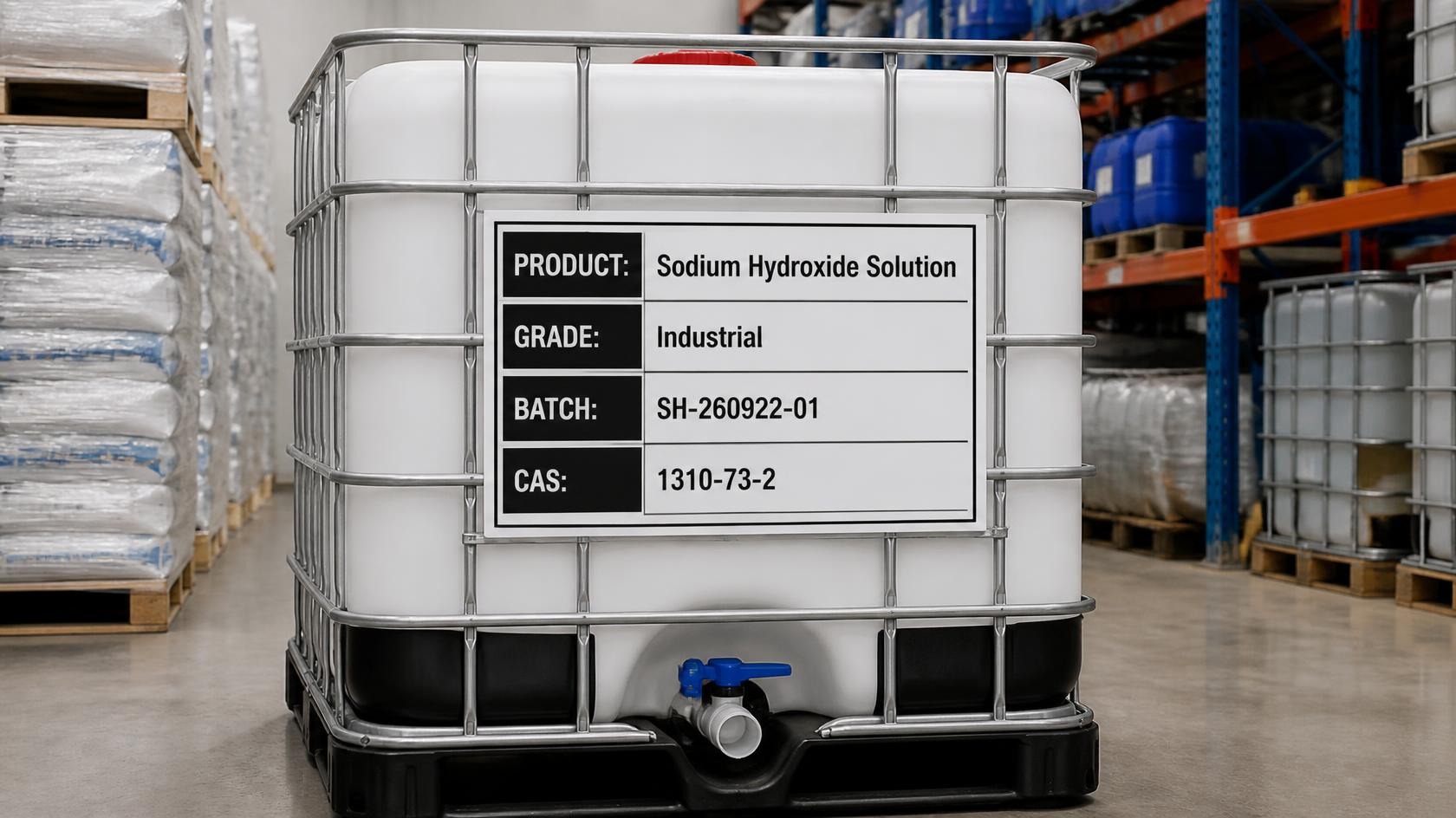
The quality of a request for quotation (RFQ) affects whether suppliers can respond quickly and accurately or need to request additional information.
To accurately quote an industrial chemical RFQ, suppliers need more than the chemical name and quantity. Grade, specification, packaging, destination, delivery timeline and documentation can affect availability, pricing and delivery.
A clear RFQ enables procurement teams to compare offers against the same requirements.
1. Identify the exact chemical
Start with the product name and include a more precise identifier where available.
Provide the chemical name, CAS number, grade and any relevant product code or manufacturer reference.
For example, “caustic soda” may be insufficient. Specify whether you need flakes, pearls or liquid sodium hydroxide, along with the required concentration and grade.
2. State the required specification
Two products with the same basic chemical identity may not be interchangeable in a production process.
Include relevant requirements such as purity, concentration, viscosity, moisture content, particle size and other applicable technical parameters. Attach any available technical data sheet, product specification, certificate of analysis or existing supplier specification.This provides suppliers with a defined basis for quoting and helps prevent offers for products that do not meet your requirements.
3. Specify quantity, demand and packaging
State the required quantity and unit clearly.
For example:
- 20 metric tonnes
- 500 drums
- 1,000 kg
- 10 IBCs
For recurring requirements, include estimated monthly or annual demand. One-off purchases and recurring supply contracts may have different commercial terms, so suppliers need to understand the demand pattern.
Also specify whether you need bulk delivery, drums, bags, IBCs or another format. Include any requirements related to storage, transport or production.
4. Give the destination and delivery requirement
Suppliers need the delivery location to provide a meaningful delivered quote.
Include the destination, preferred port where applicable, and required delivery date or lead time. For international shipments, specify the required delivery basis or Incoterm if applicable.
5. List the documentation you require
Industrial chemical purchases may require documentation for quality, safety, regulatory or internal procurement purposes.
Depending on the product and transaction, this may include a certificate of analysis, safety data sheet, technical data sheet, certificate of origin or other relevant documents.
State these requirements in the RFQ rather than adding them after suppliers have quoted.
6. Make the commercial requirement clear
Tell suppliers what their quotations must include, such as:
- Unit and total price
- Minimum order quantity
- Lead time
- Packaging
- Quote validity
- Payment terms
- Delivery terms
- Available quantity
- Origin of supply
These details make offers easier to compare and support consistent procurement decisions.
What a good industrial chemical RFQ looks like
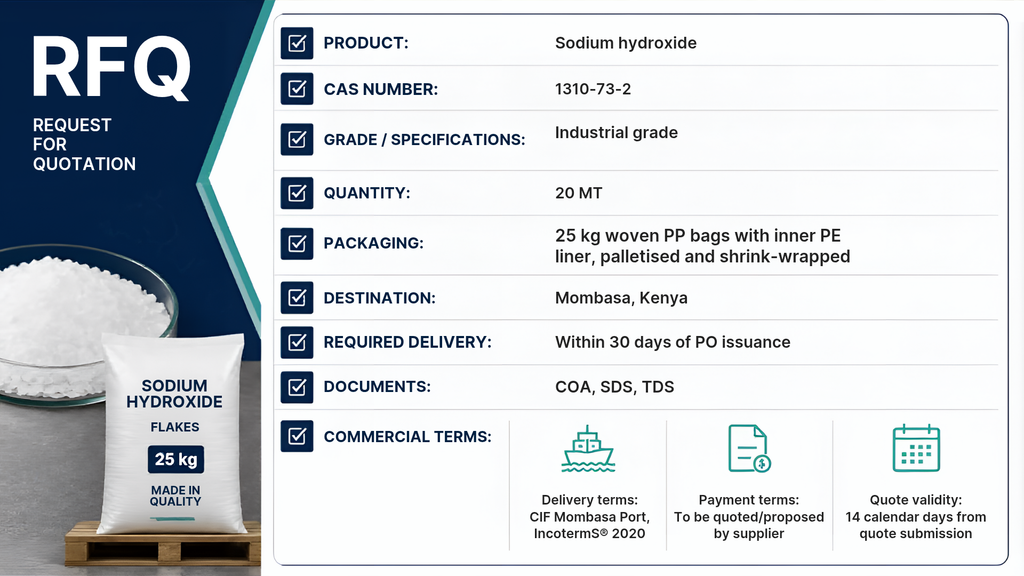
A useful RFQ should provide the information suppliers need to prepare an accurate quotation.
A simple structure could look like this:
Product: Sodium hydroxide
CAS number: 1310-73-2
Grade/specification: [required specification]
Quantity: 20 MT
Packaging: [required packaging]
Destination: Mombasa, Kenya
Required delivery: [date/timeframe]
Required documents: COA, SDS, TDS
Commercial terms: [payment/delivery requirements]
Quote validity: [required period].
The details will vary by chemical and application. The RFQ should provide enough information for suppliers to quote against a defined requirement.
Better RFQs support better sourcing decisions
An RFQ defines the product and commercial requirements that suppliers are expected to meet.
When product identity, specification, quantity, packaging and delivery requirements are clear, suppliers can respond accurately, and procurement teams can compare offers on a consistent basis.
Matta Marketplace supports specification-led sourcing by helping buyers submit clear product requirements and compare supplier quotations. Ready to source an industrial chemical? Submit your requirement through Matta Marketplace.


