
If you are sourcing raw materials for skincare, haircare or personal care products, you may have encountered both liquid paraffin and mineral oil. So, what is the difference, and which one is better for cosmetics?
The short answer is that they are often very closely related. In cosmetic applications, liquid paraffin is commonly used to refer to a highly refined mineral oil, also known as Paraffinum Liquidum or white mineral oil. The more important question for manufacturers is not simply the name, but whether the specific grade meets the requirements of the formulation.
Is liquid paraffin the same as mineral oil?
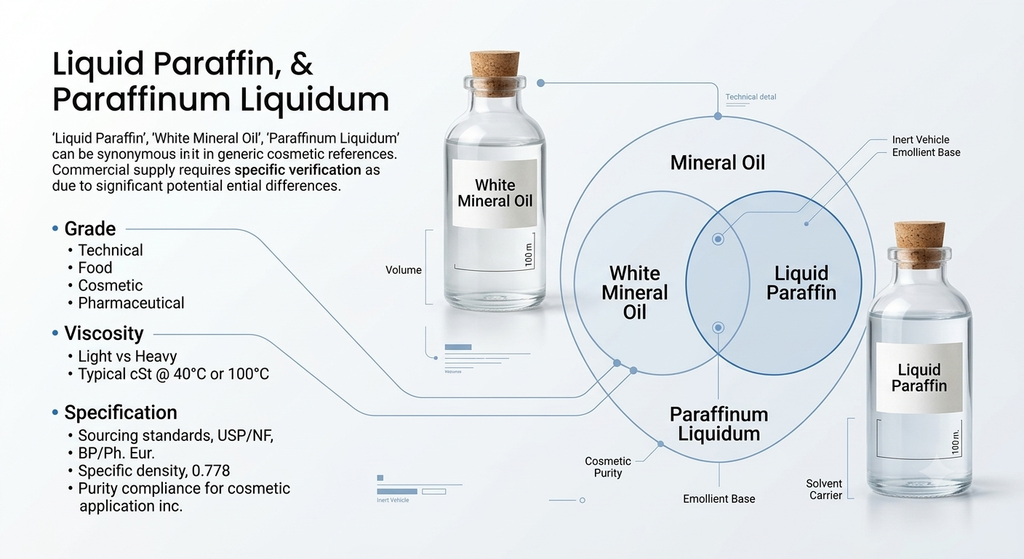
In many cosmetic contexts, yes. Liquid paraffin, mineral oil, white mineral oil and Paraffinum Liquidum are names used for closely related highly refined petroleum-derived oils. However, “mineral oil” can also be used as a broader commercial term covering products with different grades, viscosities and intended applications.This distinction matters when buying in bulk. A product labelled simply “mineral oil” does not automatically tell you whether it is suitable for a cosmetic formulation.
Which is better for cosmetics?
Neither is automatically better. The right choice depends on the formulation and the specification required.
Highly refined mineral oil or liquid paraffin is used in products such as creams, lotions, baby oils, hair products and other personal care formulations. It can act as an emollient and help form a protective layer that reduces moisture loss from the skin.For manufacturers, the focus should therefore be on selecting the appropriate cosmetic-grade material rather than choosing between the two names.
What to check before buying?
The grade and specification can affect how the oil performs in a formulation. Key factors include:
- Viscosity: Different white mineral oils are available in different viscosity ranges. A lighter oil may be appropriate where a thinner texture is required, while higher-viscosity grades can provide a different feel and consistency.
- Purity and grade: Cosmetic formulations require appropriately refined materials. Buyers should confirm that the product meets the relevant specification for the intended application.
- Technical documentation: Request the product’s Technical Data Sheet (TDS) and Certificate of Analysis (COA). These can confirm parameters such as viscosity, appearance, purity and applicable standards.
- Application compatibility: The specification should match the finished product. A mineral oil suitable for an industrial process should not automatically be substituted for a cosmetic-grade material.
So, what should you buy?
If your formulation calls for liquid paraffin, a suitable highly refined white mineral oil may meet the requirement, but the product specification should always be verified before substitution.
For cosmetic manufacturers, the better purchasing decision is therefore based on grade, viscosity, purity, documentation and intended use, rather than whether the supplier calls the product liquid paraffin or mineral oil.
Ready to source the right grade for your formulation? Explore cosmetic-grade mineral oil and liquid paraffin options on Matta Marketplace, submit your specific requirements and request tailored quotations from suppliers.
Frequently asked questions
Is liquid paraffin the same as white mineral oil?
They are closely related terms and are often used interchangeably in cosmetic and pharmaceutical contexts, but buyers should verify the exact product specification.
Is mineral oil suitable for cosmetics?
Highly refined cosmetic-grade mineral oils are used in many personal care formulations. The appropriate grade must be confirmed for the intended application.
What should I request from a supplier?Ask for the product specification, TDS, COA, viscosity information, grade and relevant quality certifications or standards.