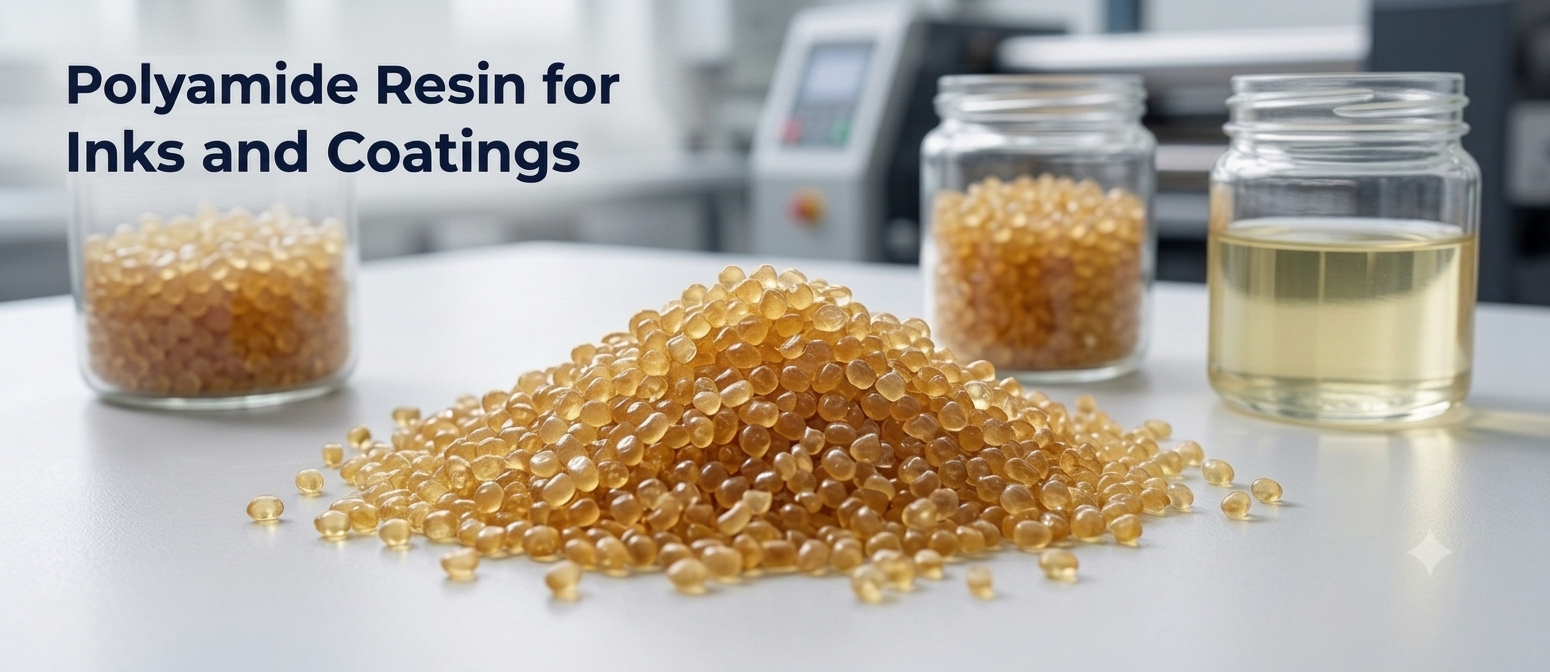
Choosing a polyamide resin for inks and coatings is not simply a matter of finding a product labelled “polyamide resin” and comparing prices. Different grades are designed for different solvent systems, applications and performance requirements.
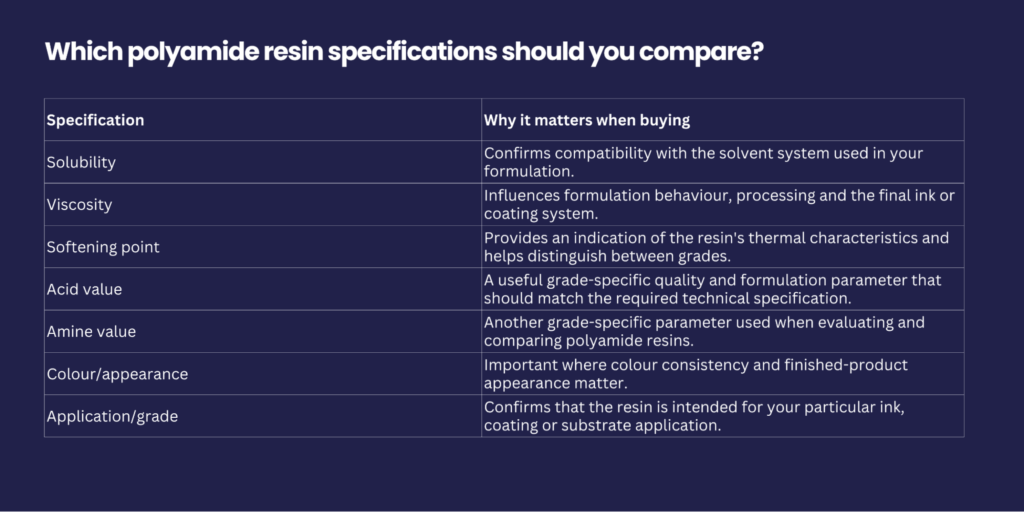
For manufacturers of printing inks and coatings, solubility, viscosity, softening point, acid value, amine value and application grade can all affect whether a resin is suitable for a particular formulation.
If you are sourcing raw materials in Nigeria, the cheapest quotation may not be the most economical option once specifications, documentation, minimum order quantities, delivery and product consistency are considered. So, what should you look for when buying polyamide resin for inks and coatings?
Why the right polyamide resin for inks and coatings matter
Polyamide resins are used as binders in various solvent-based printing ink systems, particularly flexographic and gravure inks. Depending on the grade, they can also be used in selected coating and paint applications.
However, polyamide resin is not one interchangeable material. Grades can differ in solvent compatibility, viscosity, softening point and intended application. Commercial ranges include alcohol-soluble grades, co-solvent grades and grades designed for printing on untreated polyolefin surfaces.
The first question when sourcing should therefore be: “Which grade is compatible with my formulation and production process?”
The solvent blend, substrate, printing process and required finished-product properties should all be considered before purchasing.
What type of polyamide resin for inks and coatings do you need?
The appropriate polyamide resin depends largely on your formulation and solvent system. Two common categories used in printing-ink applications are alcohol-soluble and co-solvent polyamide resins.
The appropriate polyamide resin depends largely on your formulation and solvent system. Two common categories used in printing-ink applications are alcohol-soluble and co-solvent polyamide resins.
Alcohol-soluble polyamide resin
Alcohol-soluble polyamide resins are designed for ink systems using alcohol-based solvent routes, including ethanol and IPA-based formulations.
When considering an alcohol-soluble grade, confirm:
- Which alcohol or solvent blend it is designed for
- Recommended resin concentration
- Viscosity range
- Intended printing process
- Substrate compatibility
- Required adhesion, gloss and resistance properties
Do not assume that every alcohol-soluble polyamide will behave identically simply because both products fall under the same category.
Co-Solvent polyamide resin
Co-solvent polyamide resins are designed for solvent systems that may contain combinations such as toluene, butanol and IPA, depending on the grade. These grades are commonly offered for flexographic and gravure inks, with some also specified for high-gloss liquid inks and selected paint applications.
If your formulation uses a mixed solvent system, provide the supplier with the actual solvent composition and test the resin at the intended concentration and blend.
Polyamide resin for untreated films
Some specialised polyamide grades are developed for applications involving untreated surfaces, including certain HDPE and LDPE films. Because adhesion can be challenging on these substrates, the selected grade should be tested using the actual production film and printing conditions rather than chosen solely from the supplier’s application description.
Which polyamide resin specifications should you compare?
Once you know the application and solvent system, specifications become one of the most important parts of the purchasing decision.
What else should you consider before buying polyamide resin for inks and coatings?
Technical specifications are only one part of the procurement decision. A resin can meet your target specification on paper and still be unsuitable for your actual production process.
1. Substrate and Application
Tell the supplier exactly where and how the resin will be used.
For printing inks, this could include:
- Flexographic or gravure printing
- Film, paper or another substrate
- Treated or untreated film
- Packaging or general industrial printing
- Required gloss, adhesion or resistance characteristics
For coatings, provide the intended surface, application method and required performance characteristics. The more specific the application information, the easier it is to identify an appropriate grade.
2. Documentation and Quality
Request the relevant technical and safety documentation for the quoted grade, including the Technical Data Sheet, Safety Data Sheet and applicable quality or regulatory documentation.
Documentation also helps you confirm that the material being quoted matches your internal specification. Our procurement guidance notes that incomplete or incorrect chemical documentation can contribute to shipment delays, quality problems and compliance issues.
3. Consider MOQ, Packaging and Supply
Minimum order quantity, packaging format and lead time can influence the real cost of sourcing polyamide resin. A lower unit price may not be a real saving if the minimum order is much larger than your production requirement or the material has a long lead time.
For a broader view of how to evaluate the real cost of chemical purchases, see Matta’s guide to calculating the true cost of chemical procurement.
4. Sample and Testing
A specification sheet can help shortlist a grade, but it should not replace formulation testing. Where possible, request a sample and test it using the actual formulation, solvent system, substrate and production conditions. This can help identify issues with dissolution, viscosity, adhesion, printability or finished-film performance before committing to a larger purchase.
Where can you buy polyamide resin for inks and coatings?
Once your application and specification are clear, the next step is finding a supplier that can meet those requirements consistently. Matta Marketplace provides a marketplace for sourcing chemicals and raw materials, allowing buyers to search products, compare options, request samples and request quotations.
You can also source polyamide resins through Matta Marketplace by submitting a specific product requirement and requesting tailored quotations. Explore polyamide resin options on Matta Marketplace and request a quote today.